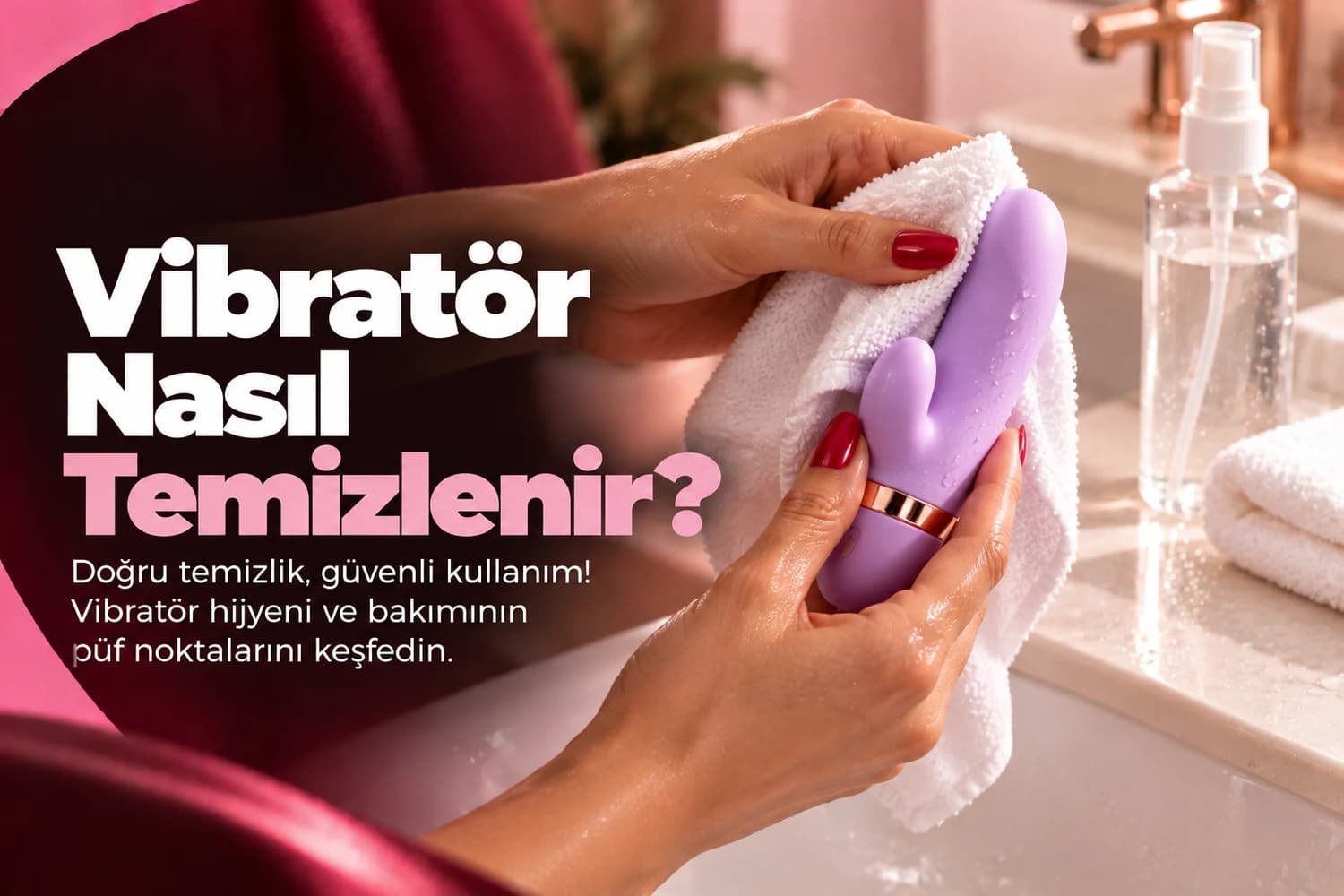
Vibrators are essential personal wellness products. To ensure these items remain safe to use and last for a long time, regular cleaning and proper storage habits are crucial.
Vibrator cleaning is particularly necessary to remove body fluids, lubricant residues, and other impurities that can accumulate on the surface of the product.
So, how do you clean a vibrator, what should you wash it with, and can rechargeable vibrators be cleaned with water?
In this guide, we explain the cleaning methods for silicone, rechargeable, battery-operated, and waterproof vibrators, along with key precautions and proper storage conditions.
Why Is Vibrator Cleaning Important?
Vibrators are products that come into direct contact with the body. Therefore, cleaning them before and after each use is essential for hygiene.
Regular cleaning helps remove dirt and residue from the product's surface.
Microorganisms can accumulate on uncleaned products. Additionally, lubricants and other residues can damage the product's surface or mechanical parts over time.
However, the cleaning process must be done correctly. Inappropriate chemicals, high temperatures, and excessive water contact can damage some products.
How to Clean a Vibrator: Step-by-Step
The method used for cleaning a vibrator depends on the material of the product and its water resistance features.
General cleaning steps are as follows:
1. Turn Off the Device
Turn off the vibrator before cleaning.
If a charging cable is connected, unplug it. For battery-operated models, follow the manufacturer's maintenance instructions.
Electronic products should never be cleaned while plugged into a power source.
2. Check the Product's Water Resistance
Check whether the product is waterproof or water-resistant.
Protection classes like IPX7 and IPX8 indicate protection against immersion in water under specific conditions.
However, not every water-resistant product is suitable for full submersion.
The manufacturer's cleaning instructions should always be the primary guide.
3. Use the Appropriate Cleaning Product
For products permitted by the manufacturer, warm water and mild, fragrance-free soap can be used.
Cleaners specifically developed for adult products can also be considered, provided they are compatible with the product material.
Avoid cleaners that contain perfumes, abrasives, or strong chemicals.
4. Clean the Surface Gently
Carefully clean the body of the product and any removable attachments.
Residue can accumulate around buttons, joints, and surface crevices.
However, be careful not to get water into non-waterproof electronic sections.
5. Rinse Properly
If the manufacturer allows rinsing with water, remove any soap residue.
For products not suitable for submersion, a damp, clean cloth can be used.
6. Dry Completely
After cleaning, dry the product with a clean, lint-free cloth.
Ensure the body and charging ports are completely dry before storing or charging.
How to Clean a Silicone Vibrator?
Silicone is a common material used in many adult products.
Non-porous silicone surfaces suitable for body use are generally easy to clean.
However, cleaning methods for silicone-coated electronic vibrators and non-electronic, solid silicone products may differ.
When cleaning silicone vibrators:
- Follow the manufacturer's recommended cleaning method.
- Use warm water and mild, fragrance-free soap if appropriate.
- Avoid abrasive sponges and harsh brushes.
- Do not leave soap residue on the surface after cleaning.
- Store the product only after it is completely dry.
Important: Just because it has a silicone body does not mean the vibrator can be boiled. Products containing electronic components or batteries should not be boiled unless explicitly permitted by the manufacturer.
How to Clean a Rechargeable Vibrator?
Rechargeable vibrators contain internal batteries and electronic components.
Therefore, it is important to protect the charging points during cleaning.
For cleaning rechargeable vibrators:
- Turn off the device and unplug the charging cable.
- Check the manufacturer's water resistance specifications.
- Clean the surface using the appropriate method.
- Dry the charging ports thoroughly.
- Start charging only after the product is completely dry.
Do not assume every product with a magnetic charging connection is waterproof.
How to Clean a Battery-Operated Vibrator?
Battery-operated vibrators may have a battery compartment and a cover system.
It is important that no water or cleaning agents enter the battery compartment during cleaning.
For non-waterproof models, the body can be cleaned with a slightly damp cloth as recommended by the manufacturer.
If the product will not be used for a long time, removing the batteries according to the manufacturer's instructions can reduce the risk of battery leakage.
If the battery cover or seals are damaged, the product's water protection may be compromised.
How to Clean a Waterproof Vibrator?
Waterproof vibrators are designed to provide protection against water contact under specific conditions.
However, being waterproof does not mean the product is suitable for every cleaning method.
For example, an IPX7 rating refers to protection against temporary immersion under specific test conditions.
This feature does not guarantee resistance to high temperatures, pressurized water, or strong chemicals.
For models permitted by the manufacturer, cleaning can be done with running warm water and appropriate soap.
After cleaning, the charging ports and the body must be dried completely.
What Should You Use to Clean a Vibrator?
| Cleaning Product | Assessment |
|---|---|
| Warm water | Suitable if permitted by the manufacturer |
| Mild, fragrance-free soap | Can be used on many suitable surfaces |
| Adult product cleaner | Check for material compatibility |
| Alcohol-based products | Should not be used unless permitted |
| Bleach | Should not be used unless explicitly recommended |
| Abrasive cleaners | Can damage the surface |
| Boiling water | Not suitable for electronic products |
Using a special cleaner is not always mandatory. The important thing is to apply an effective cleaning method suitable for the product's material.
Should a Vibrator Be Cleaned After Every Use?
Yes. It is recommended to clean vibrators after every use.
It is also appropriate to clean them before the first use and after being stored for a long time.
This habit helps reduce the accumulation of dirt and residue on the product surface.
If a product is shared between different people, do not rely solely on surface cleaning. Additional hygiene measures, such as using appropriate barriers and cleaning between each person, should be considered.
Common Mistakes in Vibrator Cleaning
1. Submerging Every Vibrator in Water
Submerging non-waterproof products can damage electronic components.
2. Using Strong Chemicals
Bleach, solvents, and abrasive substances can ruin some surfaces.
3. Boiling Electronic Vibrators
High temperatures can damage the battery, motor, and body.
4. Storing the Product While Wet
Damp environments can facilitate unwanted microbial growth and damage some materials.
5. Not Drying Charging Points
Wet charging ports can cause device malfunctions.
6. Continuing to Use a Damaged Product
Cleaning cracked, peeled, or degraded products becomes difficult. Damaged products should be discarded.
How Should a Vibrator Be Stored?
Proper storage helps keep the product clean and preserves its material properties.
Cleaned and completely dried vibrators should be stored in a cool, dry place away from direct sunlight.
Use the storage pouch provided with the product or a suitable box recommended by the manufacturer.
Long-term contact between adult products made of different materials can cause surface degradation. Therefore, it is beneficial to store products in separate compartments.
Frequently Asked Questions About Vibrator Cleaning
Can a vibrator be washed with soap?
For models permitted by the manufacturer, mild, fragrance-free soap and warm water can be used.
Can a vibrator be cleaned with cologne?
Cologne may contain alcohol and fragrance components. These substances can affect some product surfaces. It is not recommended unless explicitly permitted by the manufacturer.
Can a vibrator be cleaned with wet wipes?
Wet wipes may contain perfumes or substances that leave residue on the surface. Additionally, wiping with just a cloth may not provide sufficient cleaning. The method recommended by the manufacturer should be preferred.
Can a vibrator be cleaned with boiling water?
Electronic vibrators should not be boiled unless explicitly permitted by the manufacturer.
Can a waterproof vibrator be fully submerged in water?
This depends on the product's IP rating and manufacturer instructions. Not every water-resistant product is suitable for full submersion.
Is a vibrator cleaning spray necessary?
It is not always necessary. In cases permitted by the manufacturer, mild, fragrance-free soap and water may be sufficient. Always check the material compatibility of special cleaners.
How often should a vibrator be cleaned?
It is recommended to clean it before the first use and after every use. Products stored for a long time should be checked and cleaned before being used again.
Conclusion: What to Consider When Cleaning a Vibrator
Vibrator cleaning is an important part of personal hygiene and product maintenance.
The correct cleaning method should be determined based on the product's material, electronic structure, and water resistance features.
The most important rule is to follow the manufacturer's cleaning instructions and clean the product after every use.
You can browse different vibrator models and maintenance options suitable for adult products on Sexdoktoru.com, and discover options that fit your needs by comparing the material and cleaning features of the products.