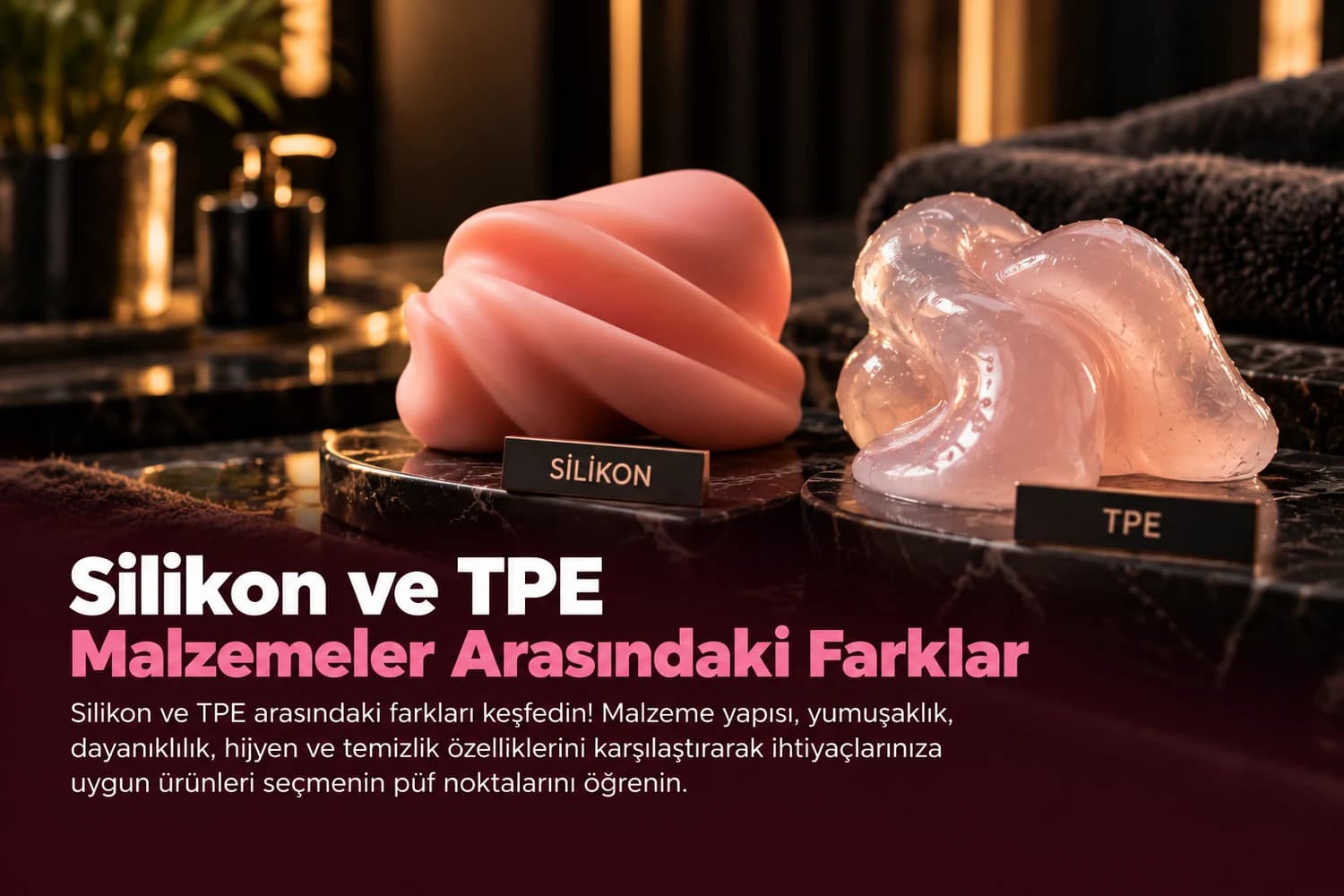
When purchasing personal adult products, users often encounter silicone and TPE as the most common materials. Both are preferred due to their flexibility, various firmness options, and suitability for diverse product designs.
However, silicone and TPE are not the same material. They differ significantly in terms of production structure, surface properties, durability, cleaning requirements, and lifespan.
So, is silicone or TPE better? What are the differences between silicone and TPE? Which material is more hygienic and longer-lasting?
In this comprehensive guide, we compare silicone and TPE materials used in adult products across all key aspects.
What is Silicone?
Silicone is a family of synthetic materials with a silicon-oxygen-based polymer structure. Through different production techniques, products can be manufactured with soft, flexible, or firmer characteristics.
High-quality silicone used in adult products stands out for its flexibility and, in proper formulations, its non-porous surface.
Key features of silicone material:
- Can be produced in various levels of flexibility and firmness.
- Can be highly durable in high-quality formulations.
- Easier to clean due to its non-porous surface.
- Available in a wide range of colors and designs.
- Offers a long lifespan with proper care.
- Can exhibit temperature resistance depending on the product type.
However, simply labeling a product as “silicone” does not automatically mean it is high-quality or safe for body contact. Material composition and manufacturer safety information should always be reviewed.
What is TPE?
TPE (Thermoplastic Elastomer) is a general term for a group of materials that exhibit rubber-like flexibility and can be processed using thermoplastic methods.
TPE is not a single chemical formula; it refers to a broad family of materials composed of various polymer blends.
In adult products, TPE is particularly used in designs where a soft and flexible structure is desired.
Key features of TPE material:
- Offers a soft and flexible structure.
- Available in various firmness and texture options.
- Can be produced using various molding methods.
- Can be more economical than silicone alternatives in some products.
- Durability varies depending on the specific formulation.
- Some types may have porous surfaces, making them harder to clean.
The hygiene and maintenance requirements of TPE products depend on the type of material used and the production quality.
Key Differences Between Silicone and TPE
When comparing silicone and TPE, one should consider not only softness or price but also material structure and maintenance needs.
| Feature | Silicone | TPE |
|---|---|---|
| Material Structure | Silicone-based elastomer | Thermoplastic elastomer family |
| Flexibility | Depends on formulation | Depends on formulation |
| Softness | Various firmness options | Very soft options available |
| Porosity | Generally non-porous in quality versions | Some types may be porous |
| Cleaning | Generally easier | May require more attention |
| Durability | Long-lasting in quality products | Varies by formulation |
| Price | Higher in some products | More economical in some products |
1. Which is More Hygienic?
Hygiene is one of the most important criteria when choosing materials for adult products. High-quality, non-porous silicone surfaces generally offer easier maintenance when cleaned properly. Some TPE formulations, due to their porous structure, may make it difficult to remove residues.
However, a non-porous material does not mean the product is inherently sterile or completely risk-free. For both materials, the product must be cleaned according to manufacturer instructions before the first use and after every use.
2. Is There a Difference in Softness?
Both silicone and TPE can be produced in various firmness levels. Some TPE products can be extremely soft and flexible, but silicone can also be manufactured with very soft formulations. Therefore, it is not accurate to determine which is softer based solely on the material name; the product's design and formulation must be evaluated together.
3. Which is More Durable?
Durability depends on product quality, frequency of use, cleaning methods, and storage conditions. High-quality silicone products can be very durable with proper care. Some TPE products may be more prone to surface changes, deformation, or stickiness over time, though this does not apply to all TPE products.
4. How to Clean Silicone and TPE Products?
Cleaning should always follow the manufacturer's instructions. Silicone products can often be cleaned with warm water and a mild cleanser, provided they do not contain electronic components. TPE products require more caution; avoid abrasive chemicals and high temperatures. Always ensure the product is completely dry before storage.
5. Lubricant Compatibility
Water-based lubricants are generally compatible with most silicone and TPE products. However, silicone-based lubricants can damage some silicone products, and oil-based products may be incompatible with certain elastomers. Always check the manufacturer's compatibility guidelines.
6. Is There a Price Difference?
Prices vary based on quality, brand, design, and electronic features. While some TPE products are more budget-friendly, high-quality silicone is often priced higher due to its production process and material properties. Remember that price alone is not a guarantee of safety or quality.
Conclusion: Which Should You Choose?
High-quality, non-porous silicone is often the preferred choice for ease of cleaning and durability. TPE offers excellent softness and flexibility at various price points. When making a choice, prioritize manufacturer safety information, material composition, and your specific usage needs. For more expert advice, visit Sexdoktoru.com to explore our informative guides on adult product care and selection.